Launch offer — valid today only

📄 Digital book in PDF · read it on your phone or print it

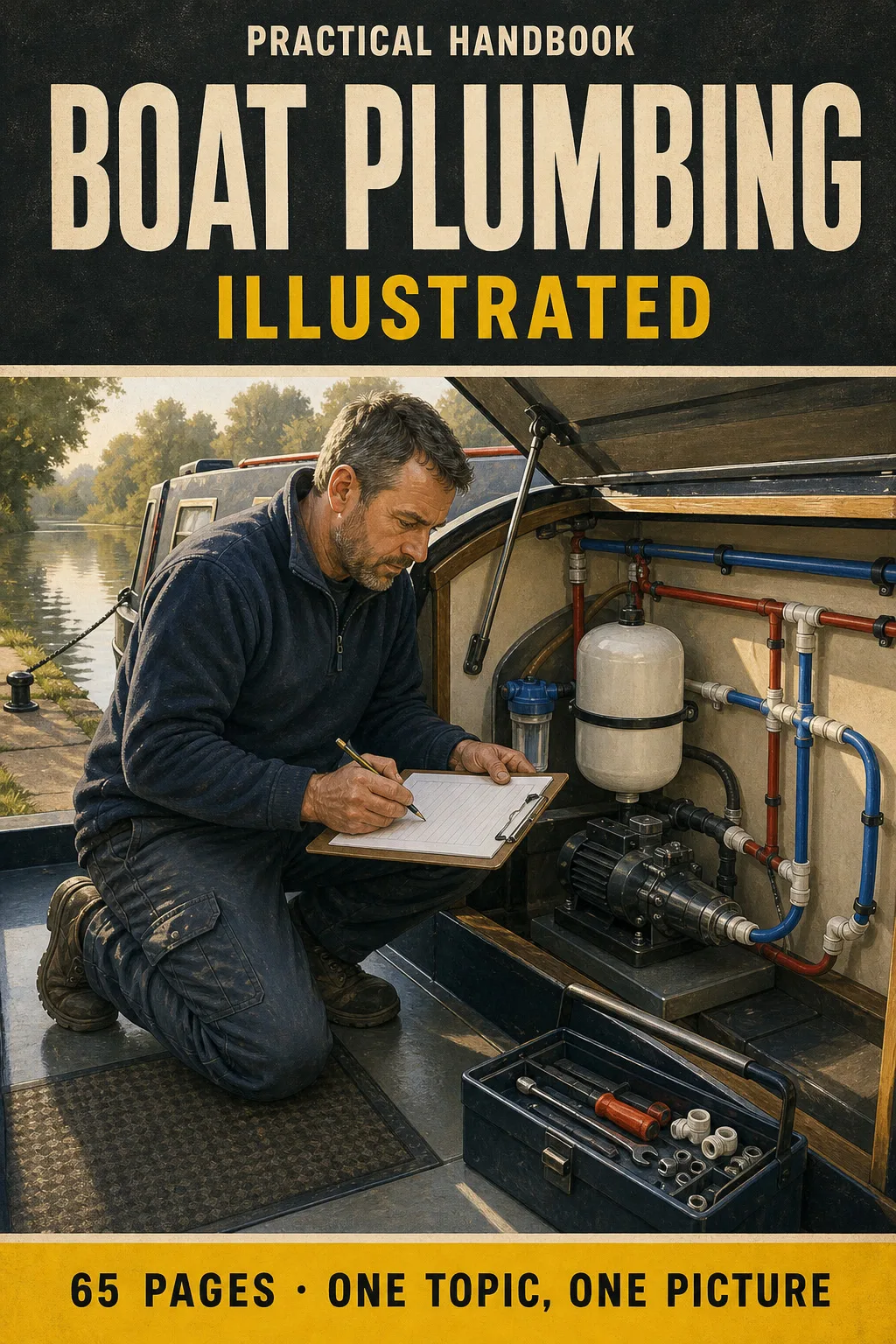
Your Boat's Plumbing in Drawings: Know What Every Pipe, Pump and Valve Does, and Where to Look First One Topic on Every Page

The whole water system, the diaphragm pump, the accumulator, the calorifier, sink and shower drains, cassette and pump-out toilets, the vented loop, seacocks and the bilge pump. Every topic has its own page: the drawing first, then what you need to remember. 65 illustrated pages.

YES, SHOW ME THE DRAWN PAGES

🔒 Secure checkout · PDF by email · 30-day guarantee
Every topic, its own pageEach part and each job drawn, with the explanation alongside
65 illustrated pages8 parts, from the whole system on one page to fault-finding in one page
Up-to-date sourcesChecked against Canal & River Trust guidance and small-craft standards such as ISO 8099-1 and ISO 15083
PDF by emailFormat

Look Inside the Book

Every page has one big drawing and a box with the steps and figures you need:

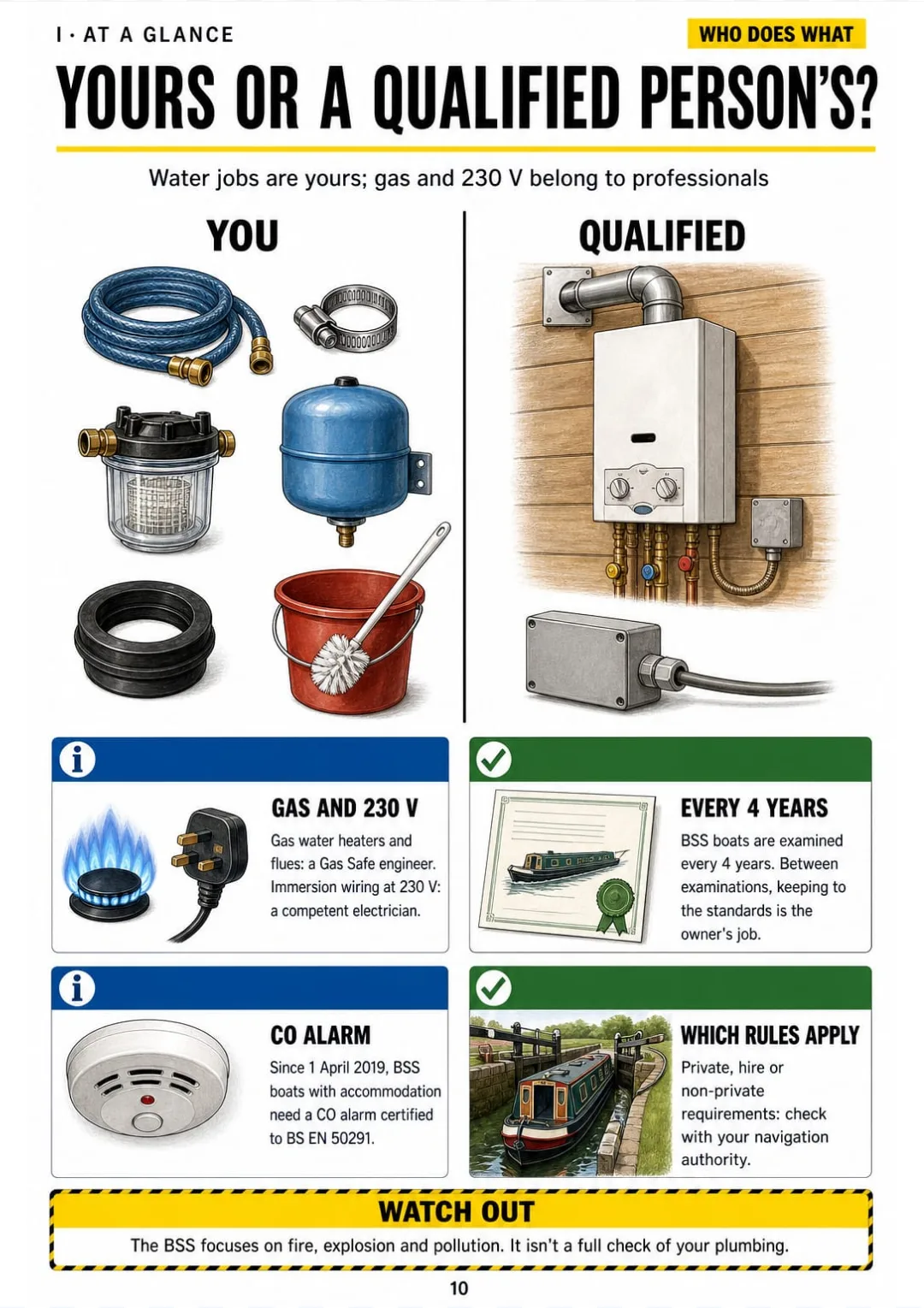
You: hoses, strainers, seals, tank. Gas Safe: gas heaters. Electrician: 230 V immersion.
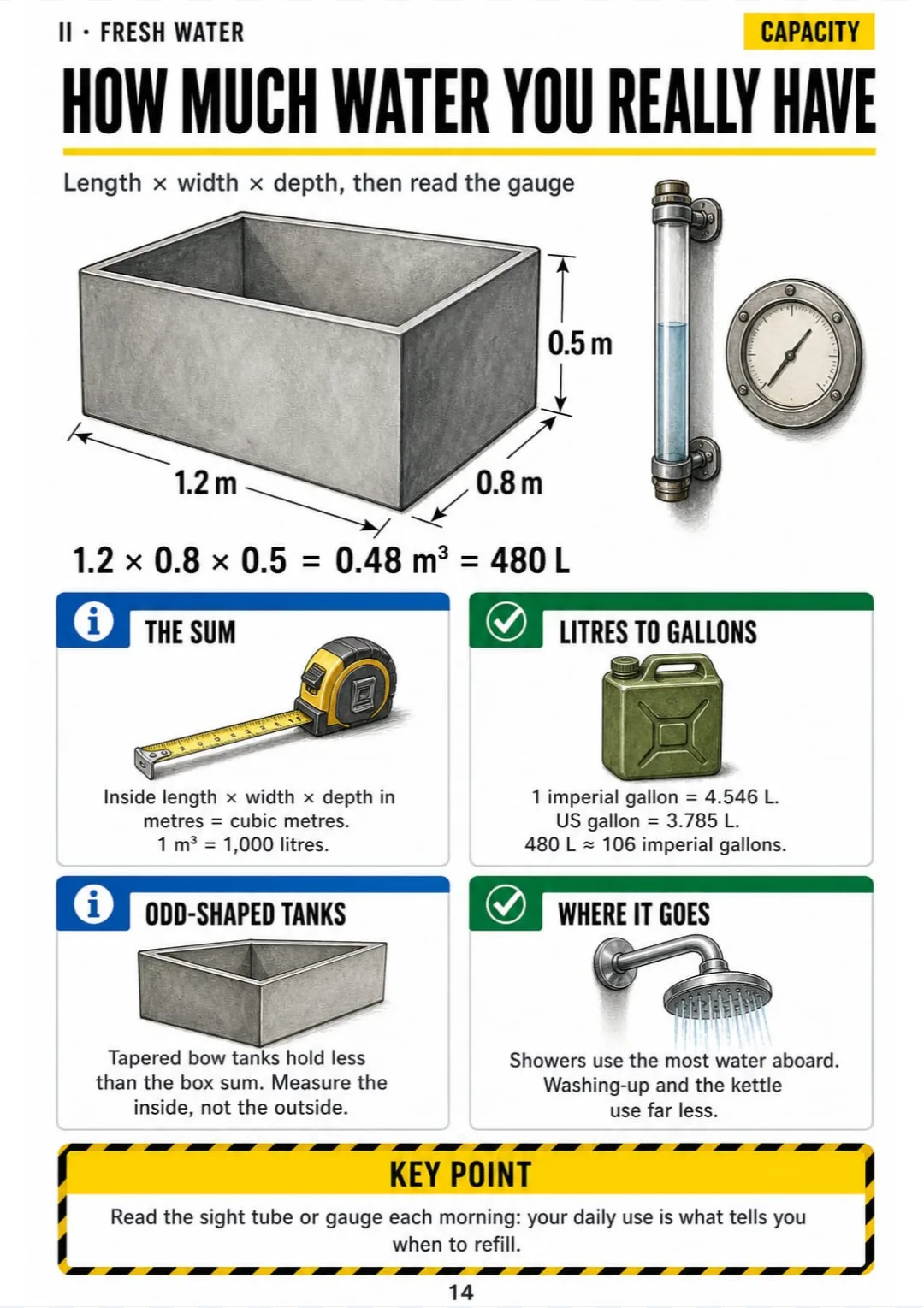
1.2 × 0.8 × 0.5 m = 480 litres: work out your tank in one line.
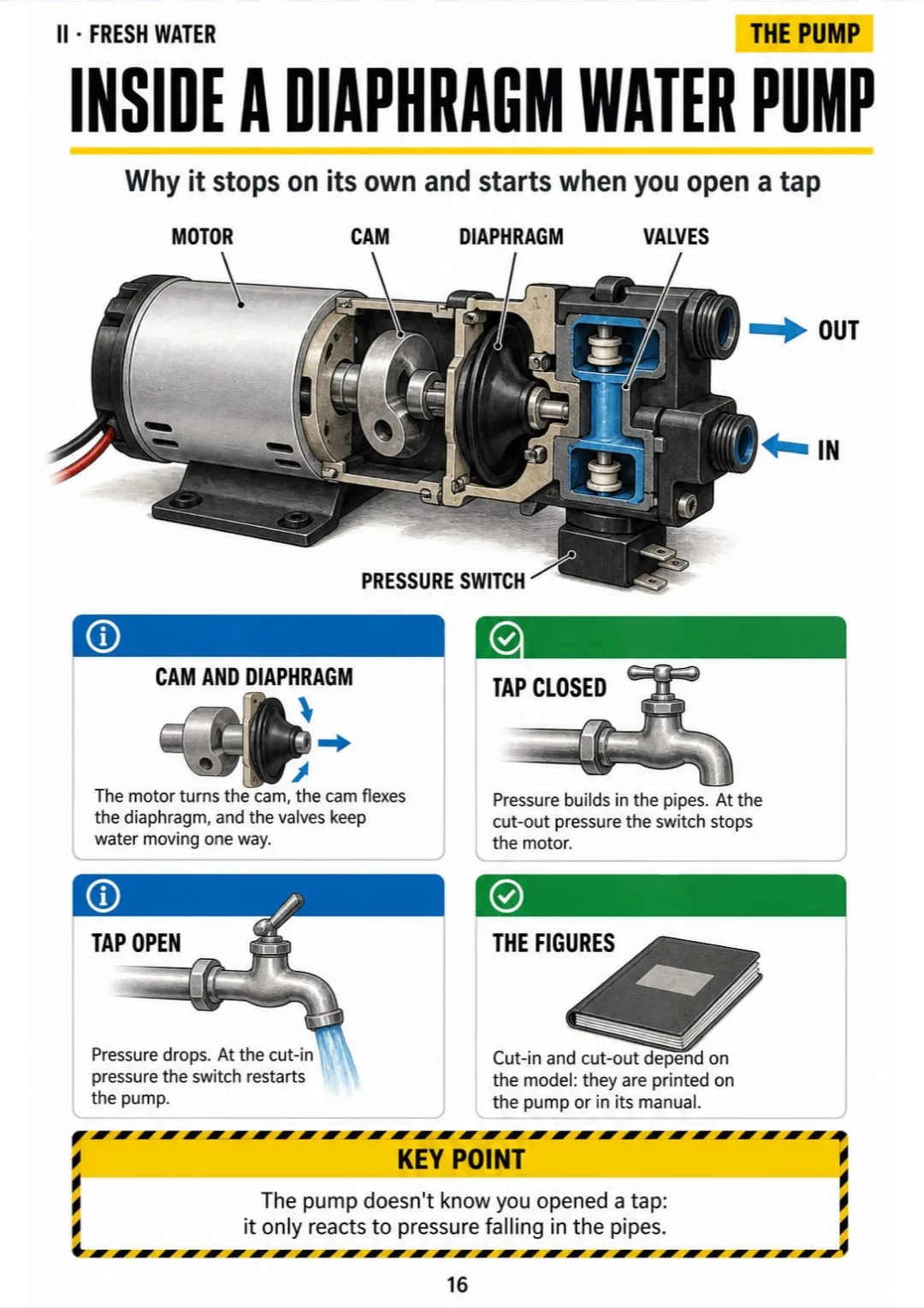
Motor, cam, diaphragm, valves and pressure switch: the pump opened up in one drawing.
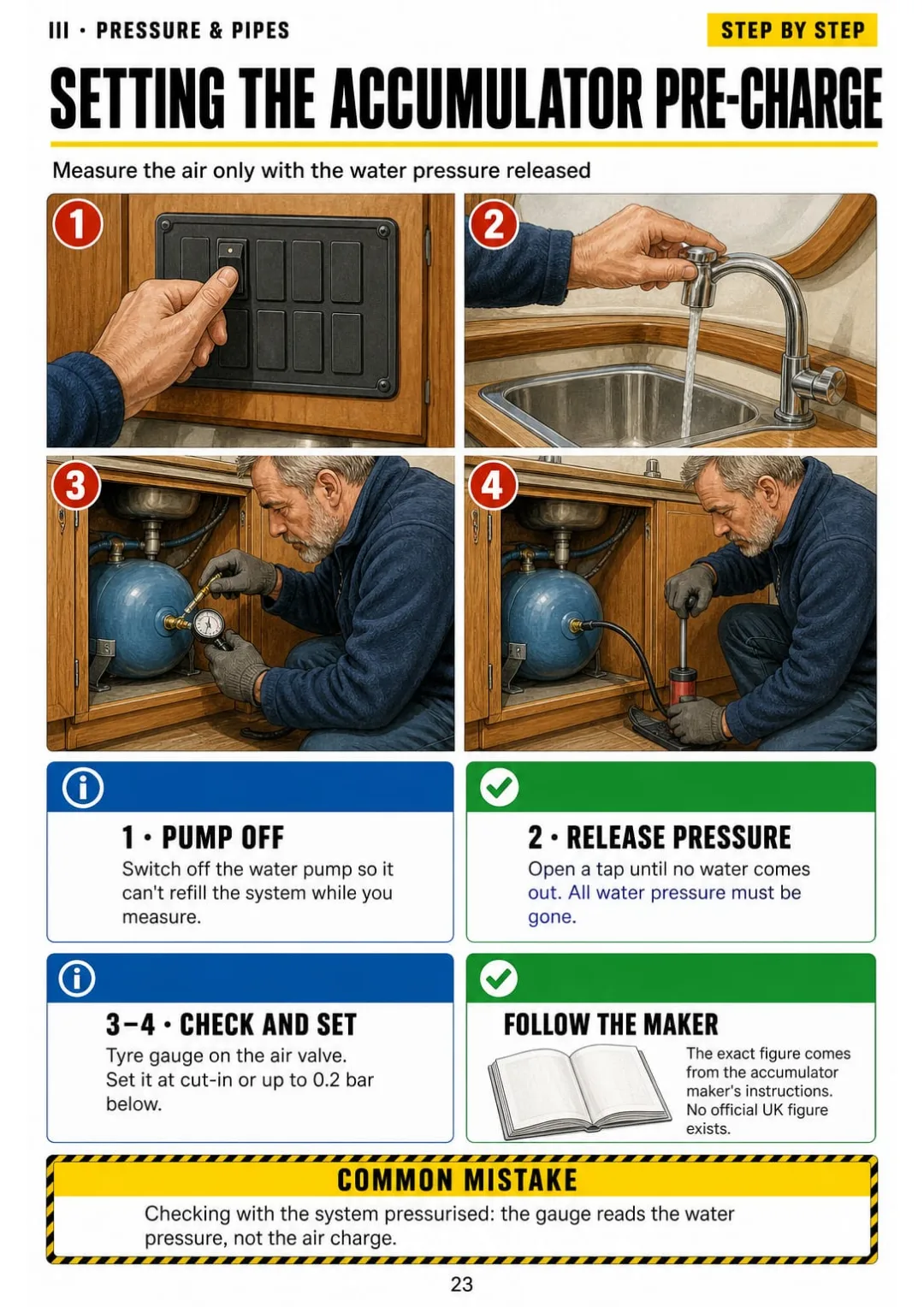
Pre-charge: pump off, pressure released, set just below cut-in as the maker says.
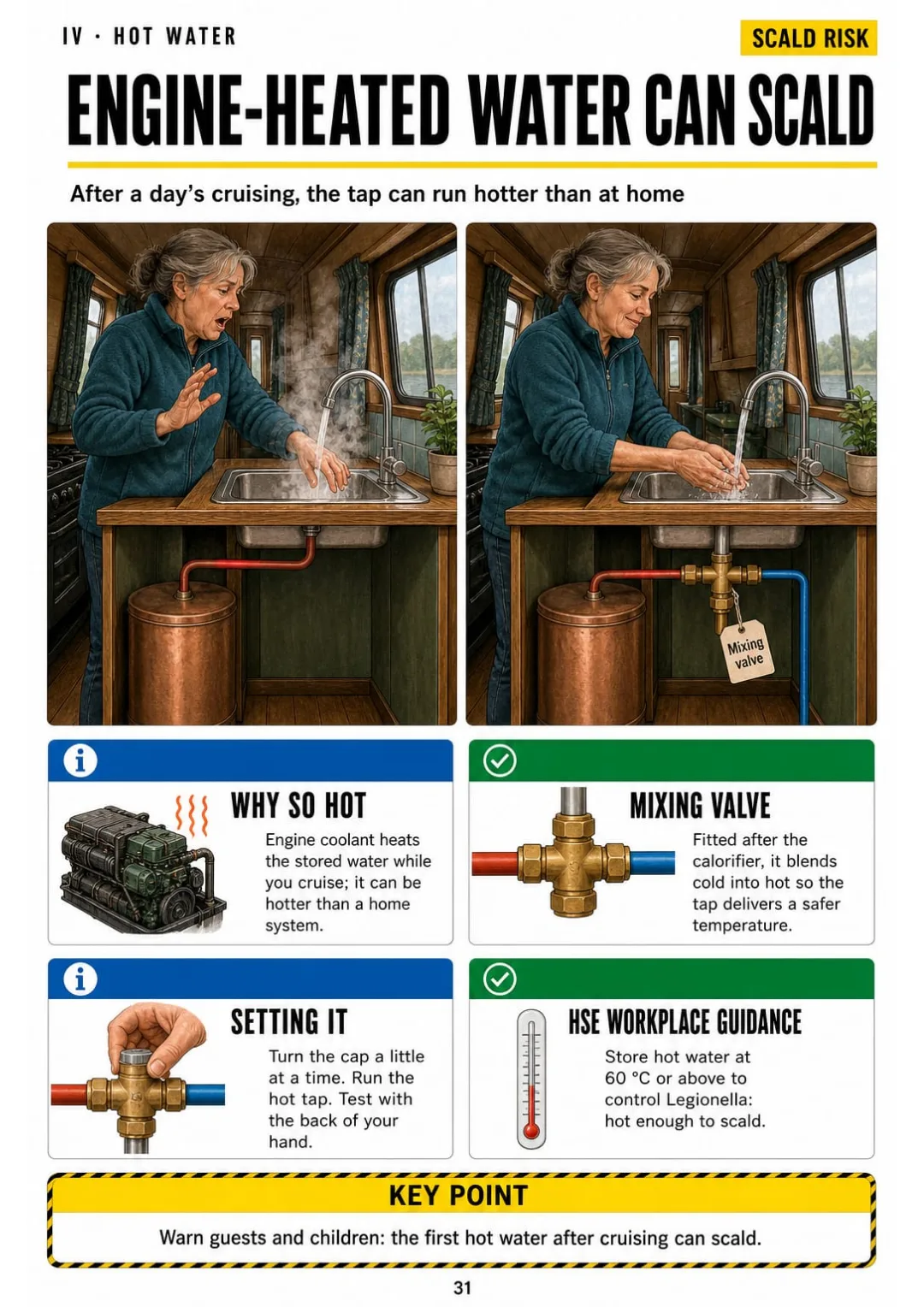
A thermostatic mixing valve after the calorifier blends cold in so engine-heated water reaches the tap safer
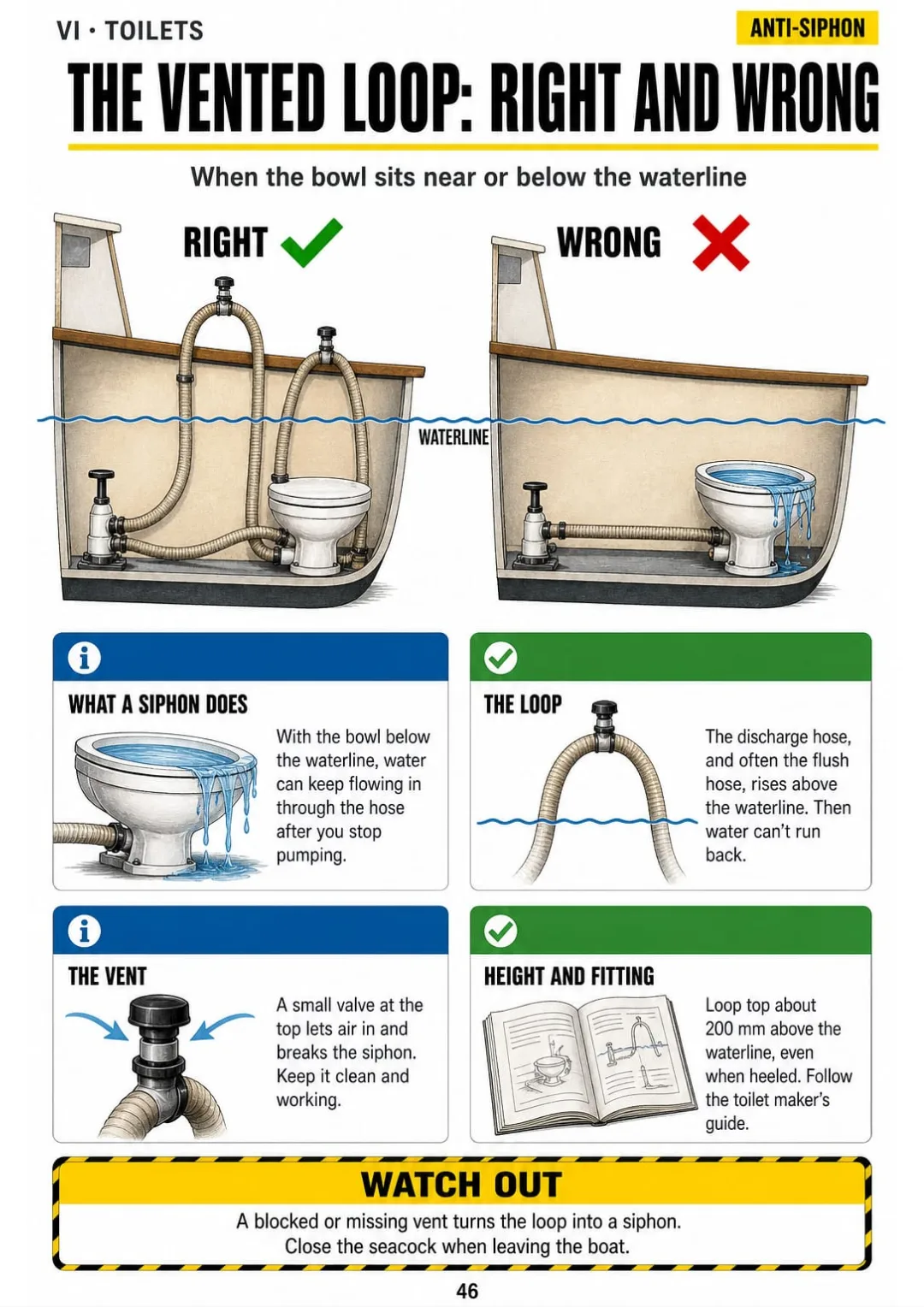
Vented loop drawn right and wrong against the waterline
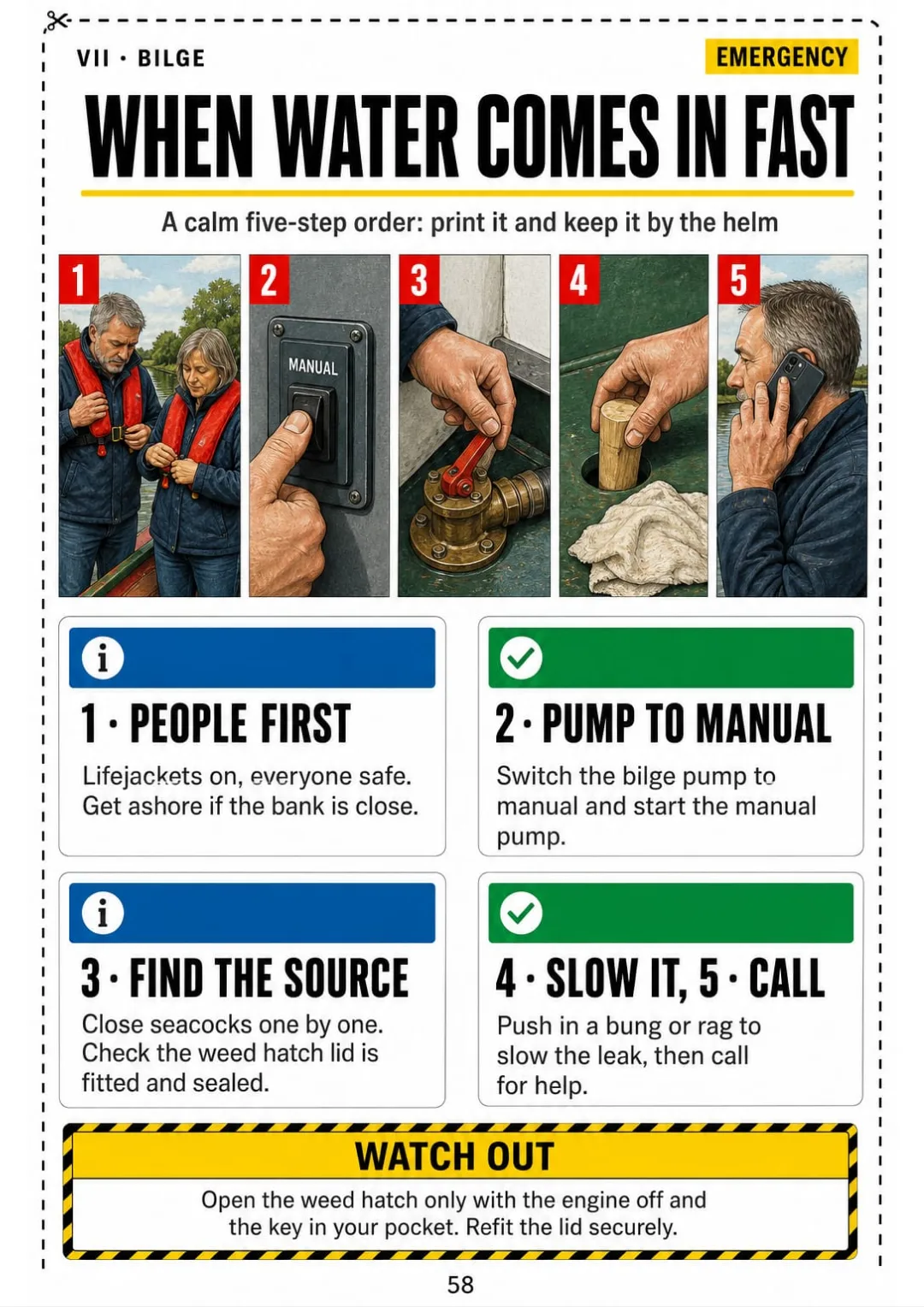
A five-step emergency card to print and keep by the helm
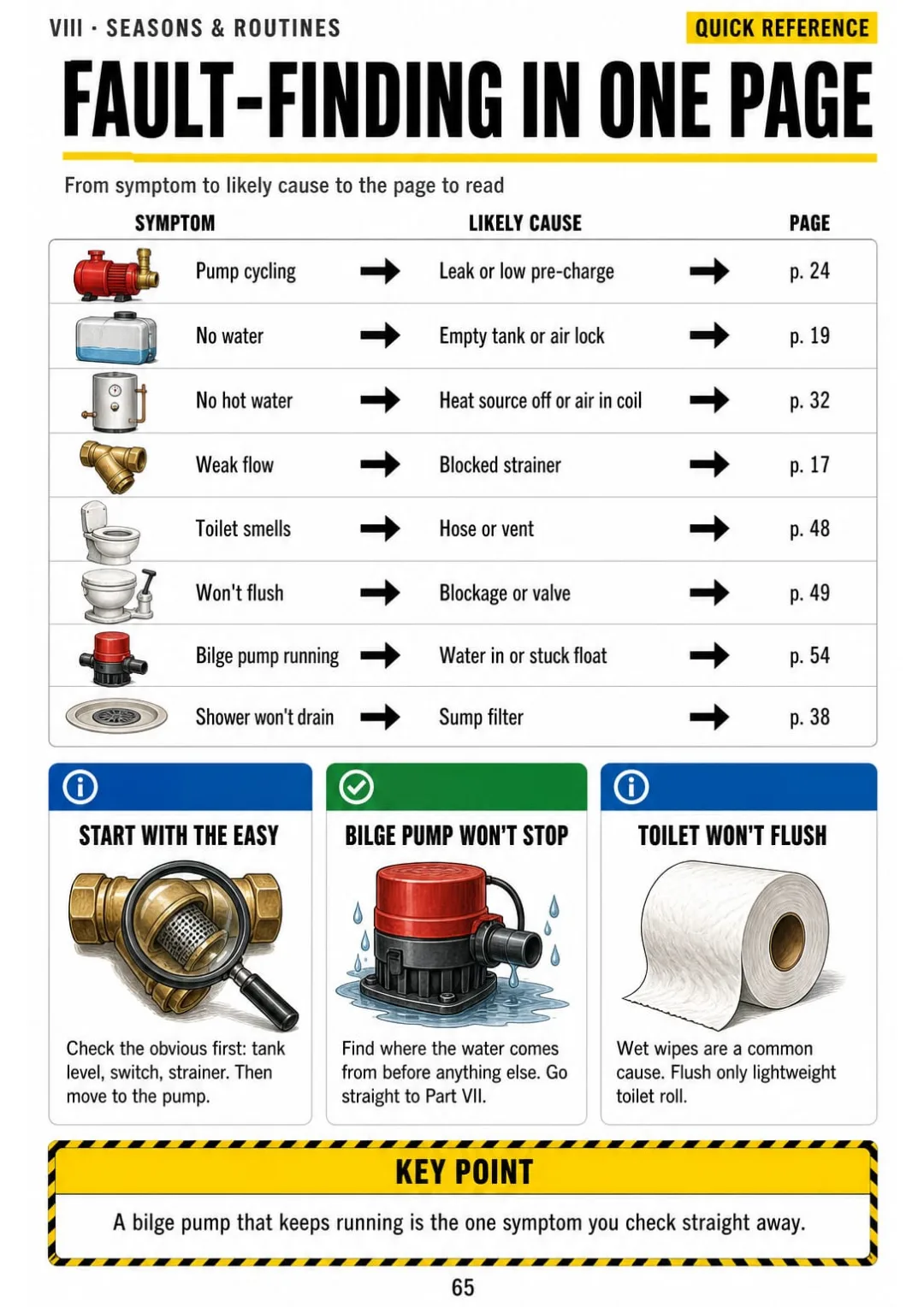
Pump cycling, no water, no hot water, weak flow, smells, flush, bilge, shower: one chart.

Swipe to see more →

These are real pages from the book. The table of contents is the full one: 8 parts and 61 topics.

The Problem Isn't You. It's How It Was Explained.

It's late, every tap is shut, and the water pump clicks on, runs for a second and stops. Ten minutes later it does it again.

You open the manual. The pump is explained in paragraphs: cam, diaphragm, valves, pressure switch, one sentence after another, and still no idea which bit does what.

Motor, cam, diaphragm, valves and pressure switch: the pump opened up in one drawing.

In the book, the same pump is opened up in one drawing: the motor, the cam that moves the diaphragm, the inlet and outlet valves and the pressure switch, each labelled where it sits.

The strainer, the accumulator, the calorifier, the vented loop and the bilge float switch work the same way: each one has its own drawn page.

You see which part does what, and when the pump starts on its own the page gives you the check order: a dripping tap, a weeping joint, the pump's own valves, then the pressure switch, before you pick up a spanner.

COMPARE FOR YOURSELF

The Same Topic, Two Ways to Learn It

THIS
  • The manual: line after line
  • Tank capacity explained only in words
  • You go back to the boat still unsure
The usable capacity of a rectangular fresh water tank is determined by multiplying its internal length, width and depth, each expressed in metres, to obtain the volume in cubic metres, which is subsequently converted to litres by multiplying by one thousand. It should be noted that the nominal figure so obtained will not correspond to the quantity actually available, since a proportion of the water remains below the level of the outlet connection and allowance must be made for the airspace beneath the top of the tank and the filler.
FOR THIS
  • Your tank's capacity in one drawing
  • The sum in a box, in one line
  • You see it and it makes sense
1.2 × 0.8 × 0.5 m = 480 litres: work out your tank in one line.
CONTENTS

Take a Look at the 8 Parts and 61 Topics

Your system at a glance, fresh water and the pump, pressure and fittings, hot water, grey water, toilets and holding tanks, the bilge and seasonal routines: 65 pages, all illustrated.

IYour Water System at a Glance · pp. 5-11
  1. The whole system on one page
  2. Narrowboat, cruiser or yacht: what changes
  3. Above and below the waterline
  4. How to trace your own pipes
  5. The tools and spares to keep on board
  6. What you do yourself and what needs a qualified person
  7. Units you will meet: bar, psi, litres, mm
IIFresh Water: Tank, Filling and Pump · pp. 12-20
  1. The fresh water tank and its four connections
  2. Filling up without contaminating the tank
  3. How much water you really have
  4. Cleaning and sterilising the tank
  5. Inside a diaphragm water pump
  6. The strainer before the pump
  7. Pump noise and vibration
  8. Priming a pump that runs but delivers no water
  9. Servicing or replacing the pump
IIIPressure, Pipes and Fittings · pp. 21-28
  1. The pressure switch: cut-in and cut-out
  2. The accumulator and what it does
  3. Setting the accumulator pre-charge
  4. The pump that starts on its own
  5. Pipe types on boats
  6. Push-fit joints done right
  7. Hose and clip joints
  8. Finding a slow leak
IVHot Water: Calorifier and Heaters · pp. 29-35
  1. How a calorifier heats your water
  2. The safety valve on the calorifier
  3. Engine-heated water can scald
  4. No hot water: the check order
  5. Bleeding air from the engine coil
  6. Gas water heaters: what to look at, not touch
  7. Draining the calorifier
VGrey Water: Sinks, Shower and Drains · pp. 36-41
  1. Where your grey water goes
  2. The shower sump and its pump
  3. Shower pump that won't stop, or won't start
  4. Sink drains and traps
  5. Skin fittings above and below the waterline
  6. Smelly drains
VIToilets and Holding Tanks · pp. 42-50
  1. The four toilet types on UK boats
  2. The cassette toilet
  3. The pump-out system
  4. The manual marine toilet
  5. The vented loop and anti-siphon
  6. The macerator toilet
  7. Toilet smells: find the source
  8. Toilet won't flush or pumps back
  9. Servicing the toilet pump
VIIBilge and Below the Waterline · pp. 51-58
  1. What the bilge is and why it fills
  2. The electric bilge pump and float switch
  3. Manual bilge pump: your backup
  4. A bilge pump that won't stop
  5. The stern gland
  6. Seacocks: exercising and checking
  7. Keeping oil out of the bilge
  8. When water comes in fast
VIIISeasons, Routines and Quick Reference · pp. 59-65
  1. Winterising: drain everything
  2. Winterising: protect what can't drain
  3. Spring re-start
  4. The monthly 10-minute walk-round
  5. Before a long cruise
  6. The most frequent plumbing mistakes
  7. Fault-finding in one page

One Page, One Topic, All Clear

Think of it this way:

You're halfway along the canal, the tank gauge tells you nothing useful and you need to know how much water you've really got before the next water point.

You open the book at the tank page and the sum is drawn: 1.2 × 0.8 × 0.5 m = 480 litres, then what to take off for the water left below the outlet.

A thermostatic mixing valve after the calorifier blends cold in so engine-heated water reaches the tap safer

The same goes for the accumulator pre-charge, the calorifier coils, the vented loop, the seacocks and the bilge float switch: each one on its own page.

Boat Plumbing Illustrated is 8 parts and 61 topics, all drawn, with a one-page fault-finding chart at the end.

What you see drawn, you don't have to memorize.

What's Inside Boat Plumbing Illustrated:

Ipp. 5-11

Your Water System at a Glance

See your whole boat's plumbing on one labelled map before you touch anything: what changes on a narrowboat, cruiser or yacht, above and below the waterline, tracing your own pipes, tools and spares, and what to leave to a qualified person.

IIpp. 12-20

Fresh Water: Tank, Filling and Pump

The tank and its four connections, filling up cleanly, how much water you really have, cleaning and sterilising, the diaphragm pump, the strainer, priming, servicing and replacing the pump.

IIIpp. 21-28

Pressure, Pipes and Fittings

The pressure switch, the accumulator and its pre-charge, the pump that starts on its own, pipe types, push-fit and hose-and-clip joints, finding a slow leak.

IVpp. 29-35

Hot Water: Calorifier and Heaters

How the calorifier heats water, its safety valve, scalding from engine-heated water, the no-hot-water check order, bleeding the engine coil, gas heaters (look, don't touch), draining.

Vpp. 36-41

Grey Water: Sinks, Shower and Drains

Where grey water goes, the shower sump and its pump, sink drains and traps, skin fittings above and below the waterline, smelly drains.

VIpp. 42-50

Toilets and Holding Tanks

The four toilet types on UK boats: cassette, pump-out, manual and macerator, the vented loop, finding a smell, flushing faults and servicing the toilet pump.

VIIpp. 51-58

Bilge and Below the Waterline

Why the bilge fills, the electric pump and float switch, the manual backup, a pump that won't stop, the stern gland, exercising seacocks, keeping oil out, water coming in fast.

VIIIpp. 59-65

Seasons, Routines and Quick Reference

Winterising, spring re-start, the monthly 10-minute walk-round, before a long cruise, the most frequent mistakes and fault-finding on one page.

At the end of the book: A one-page fault-finding chart, a printable emergency card and seasonal routines.

Plus: 2 Free Books

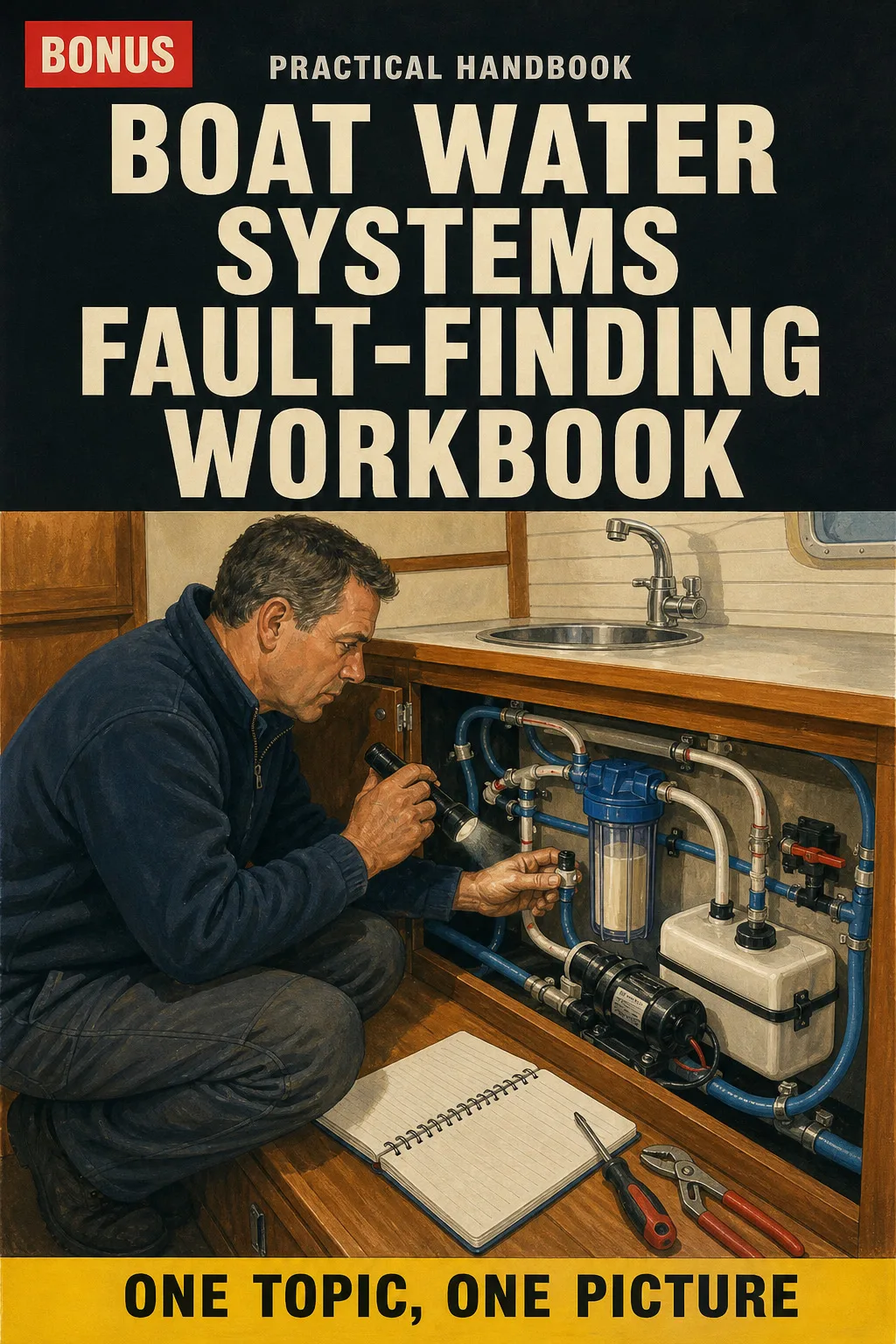
Boat Water Systems Fault-Finding Workbook

BONUS 1: «Boat Water Systems Fault-Finding Workbook»

Value on its own: US$ 17.90

Real onboard scenarios (pump keeps cycling, no hot water, toilet won't pump out, bilge pump won't stop) to work through on paper, with the answer on the matching drawn page.

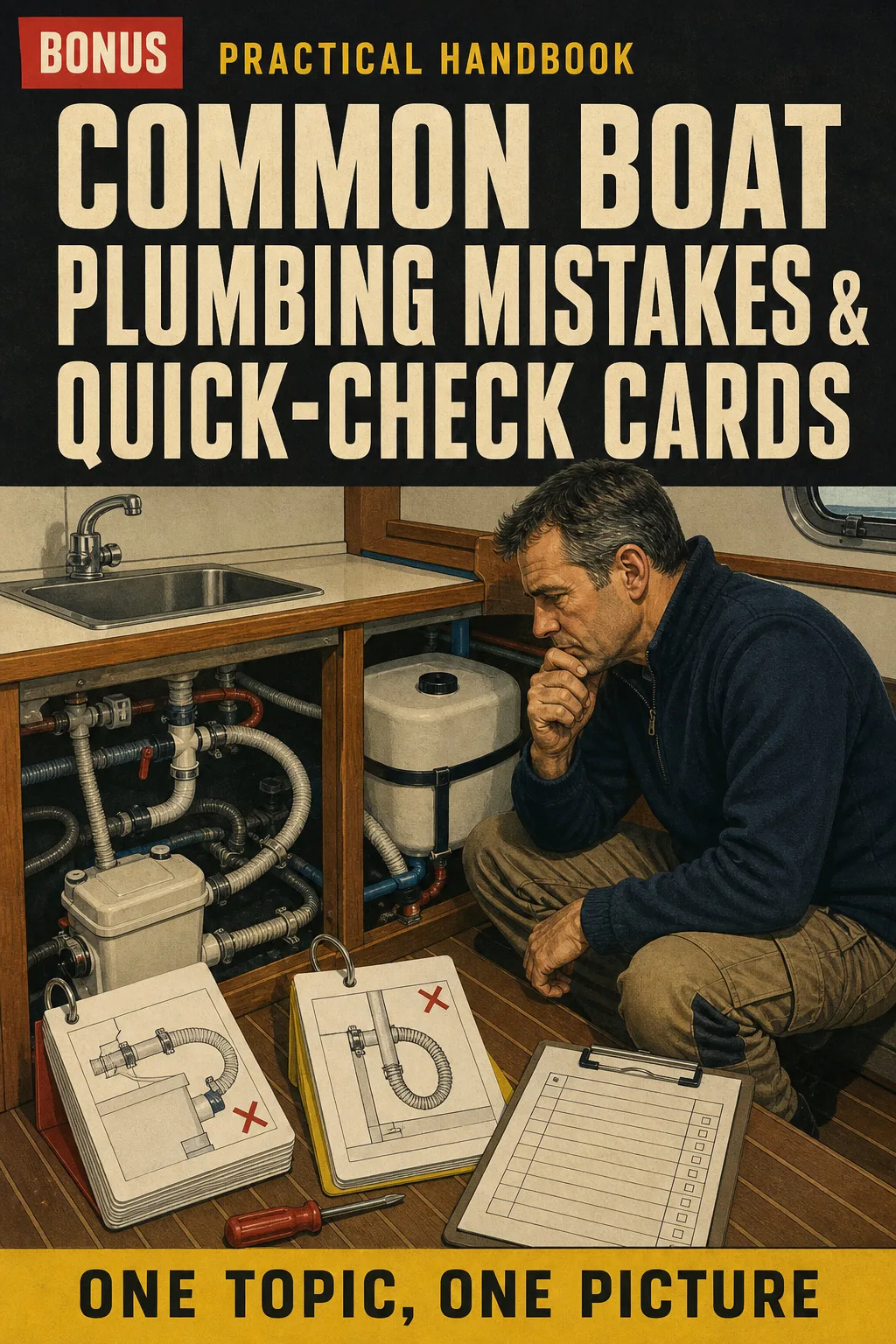
Common Boat Plumbing Mistakes & Quick-Check Cards

BONUS 2: «Common Boat Plumbing Mistakes & Quick-Check Cards»

Value on its own: US$ 14.90

The most frequent mistakes with hoses, clips, seacocks and toilets drawn before and after, plus printable cards to keep by the pump and the toilet.

Boat Plumbing Illustrated with 2 Free Books

  • Boat Plumbing Illustrated: 65 illustrated pagesUS$ 63
  • BONUS 1: Boat Water Systems Fault-Finding WorkbookUS$ 17.90
  • BONUS 2: Common Boat Plumbing Mistakes & Quick-Check CardsUS$ 14.90
  • High-resolution PDF to printIncluded
Total value US$ 95.80
YOUR PRICE:
US$ 27
You save US$ 68.80
YES, I WANT BOAT PLUMBING ILLUSTRATED FOR US$ 27

📄 This is a digital PDF book sent to your email: nothing is printed or shipped.

Secure purchaseEncrypted payment30-day guarantee

PDF by email: We email you Boat Plumbing Illustrated as a PDF, together with the two free books. It's a single payment: no installments, no extra charges.

Who This Book Is For

You've just bought your first boat

You've just bought your first boat

The labelled map shows what every pipe, valve and pump does, before you touch anything.

Winter or a long cruise is coming

Winter or a long cruise is coming

Drain-down, spring re-start and pre-cruise checks are drawn step by step, in the same order every time.

You live aboard or cruise every weekend

You live aboard or cruise every weekend

When the pump cycles, the toilet smells or the bilge pump won't stop, the drawn pages and the fault-finding chart show where to look first.

Everything You Get Today

US$ 95.80US$ 27
YES, I WANT BOAT PLUMBING ILLUSTRATED FOR US$ 27

📄 This is a digital PDF book sent to your email: nothing is printed or shipped.

30DAYS
GUARANTEE

30-Day Guarantee

Try Boat Plumbing Illustrated for 30 days, bonus books included.

We refund everything if the file won't open, if the book isn't what you see here, if you were charged twice or if the email doesn't arrive. Just email us.

You pay once. No subscriptions.

Frequently Asked Questions

Is it for me if I have a narrowboat, not a yacht (or the other way round)?

Yes. It covers narrowboats, river cruisers and sailing yachts, and one page shows what changes between them. If you've already changed a pump, the pages on accumulators, vented loops and fault-finding go well past the basics.

Where does the content come from?

Each page is checked before publishing against the Canal & River Trust's published boating guidance and the small-craft standards that cover these systems, such as ISO 8099-1 for toilet waste retention and ISO 15083 for bilge pumping. No text or table from any standard is reproduced.

Is it official material?

No. It's an independent illustrated guide, not affiliated with or endorsed by the Canal & River Trust or any standards body.

Does it replace a marine engineer?

No. It helps you understand and look after your system. Gas, major work below the waterline and anything you're unsure about belong with a qualified person, and one page shows where to draw that line.

Isn't all this free on forums and YouTube?

Some of it is, spread across threads that disagree with each other. Here it's one system in one order: every part drawn and labelled, every check in the same sequence, cross-checked against Canal & River Trust guidance and BS EN ISO small-craft standards, and printable to keep on board.

When and how does it arrive?

The book and the 2 free books arrive as PDFs by email, at the address you give when you pay.

Do I have to pay every month?

No. It's a one-off payment.

Can I have it on paper?

Yes. It's a PDF you can print at home or at a print shop and keep on board, by the pump or the toilet.

How do refunds work?

You have 30 days. We refund everything if the file won't open, if the book isn't what you see on this page, if you were charged twice or if the email doesn't arrive: just email us.

Before You Close This Page

No more rereading forum threads that go nowhere.

The pump, the accumulator and the vented loop: you see them drawn, and that's it.

You step aboard knowing where everything is.

Drawings make studying faster.

The book is right below.

One-time payment: US$ 27 · Guarantee: 30 days · PDF by email

YES, I WANT BOAT PLUMBING ILLUSTRATED FOR US$ 27

📄 This is a digital PDF book sent to your email: nothing is printed or shipped.